Painter Jillian Szeliga | Featured Artist Series

“In a society that prioritizes speed, productivity, and profit, my work is small, slow, and human. My hope is that my paintings will offer viewers an opportunity to pause and reflect… I encourage folks to really lean in and stick their noses in the frame. As artificial intelligence continues to evolve, I hope my work can show the humanity of art and foster conversations around tradition and supposed innovation.”
- Jillian Szeliga
Featured Artist Series
Jillian Szeliga| Painter
During the Hamilton Winter Jazz Fest next month, Arts at the Palace will feature paintings by Jillian Szeliga alongside Ryan Stewart. The four-day, village-wide celebration of jazz brings together live performances, a classic film screening, and nationally and internationally touring artists for audiences of all ages.
Jillian Szeliga is an oil painter and lifelong resident of upstate New York, currently living in Marcy with her husband, daughter Charlotte, and their two cats. Her work focuses on still life, using careful observation and thoughtful composition to reflect the people and moments that have touched her life. She approaches painting as a “humbling opportunity to learn new things and to revisit the childlike joy of being surprised.”
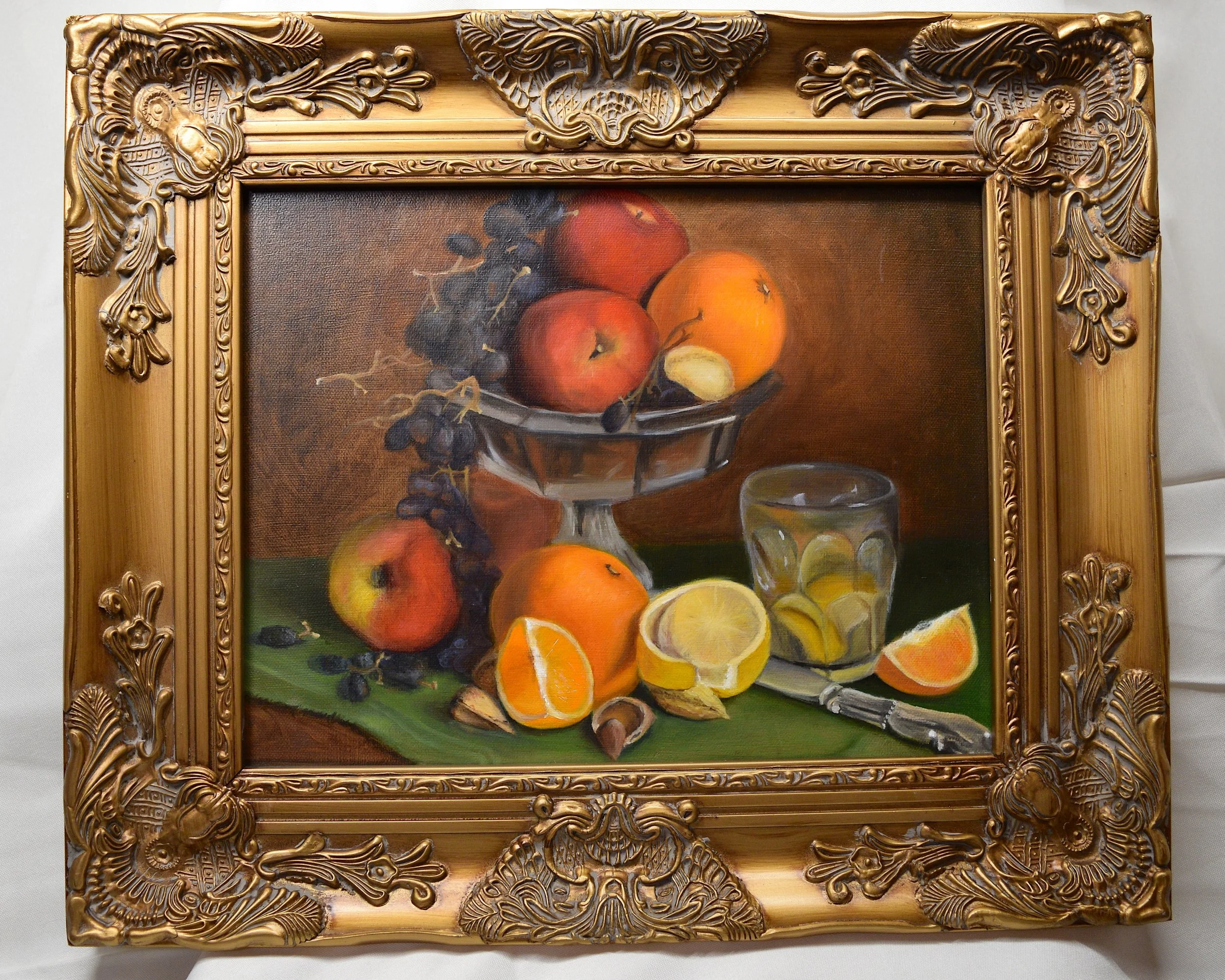
As a teenager, she remembers being emotional and rebellious, determined not to follow a conventional path. Drawing came naturally, but everything changed when a high school art teacher introduced her to oil paint. Jill quickly fell in love with the medium and her appreciation for its texture and the rich history of painters has only deepened over the years.
She went on to study art at the College of Saint Rose, concentrating in drawing and painting. While there, a class trip to Florence and Rome left a lasting impression, deepening her admiration for traditional representational painting and the long lineage of artists working carefully from observation.
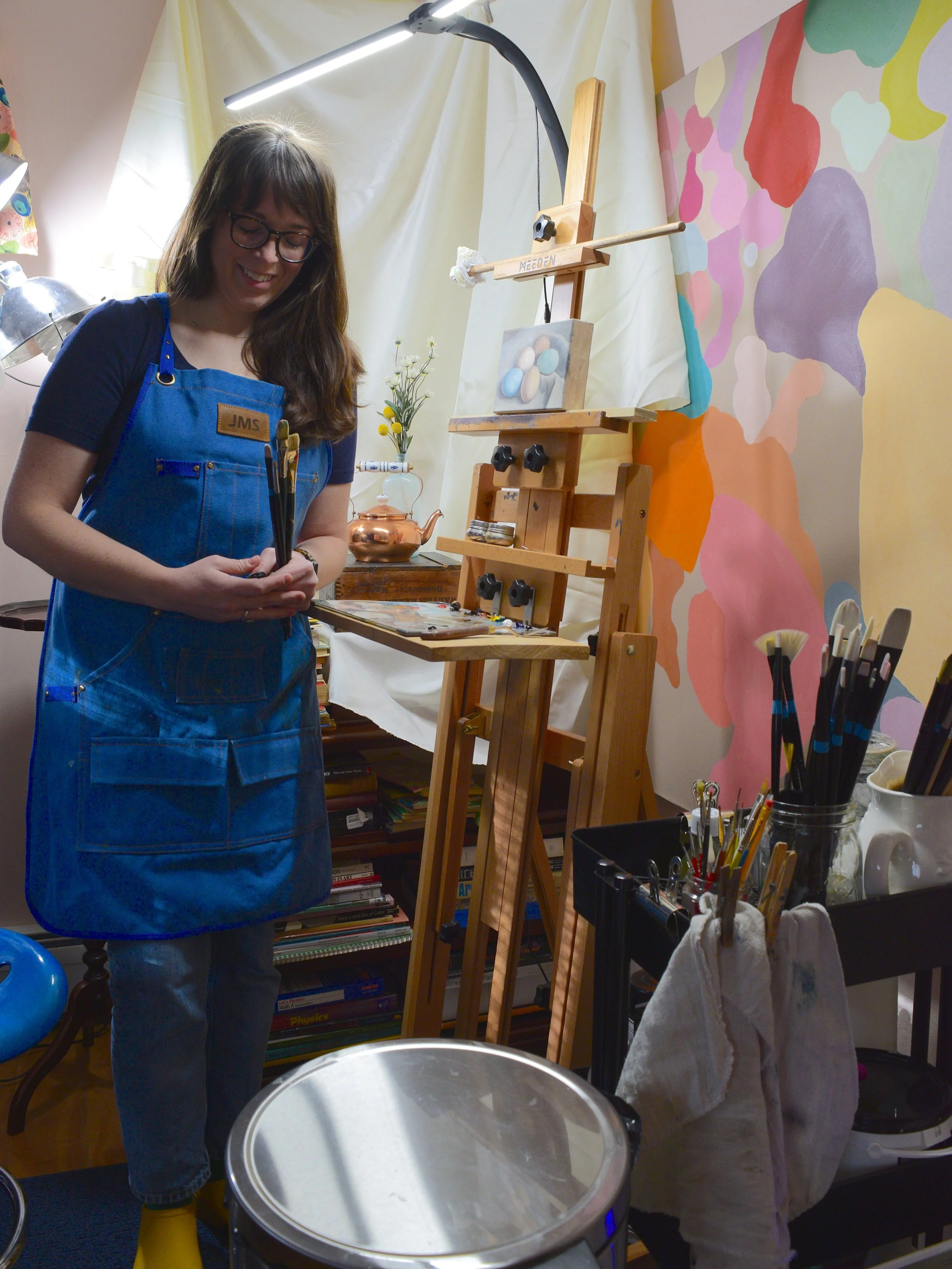
During the pandemic, while pregnant, she shared that “the long period of isolation was very challenging, and I was desperate for mental stimulation and or some form of enrichment.” After her daughter was born, she enrolled in classes, driven by what she calls her “insatiable curiosity,” an experience that ultimately shifted her perspective.
“College in your 30s hits differently,” Jill says. “I was engaged in lively discussions and expanding my worldview, and when it ended it felt like a real loss.” At the same time, she was taking community art classes at Munson and saw her technical skills steadily improving. Questions began to accumulate, ideas she wanted to test through painting and with encouragement from her family she took the big leap… leaving her career to focus on painting.
One unexpected moment helped push that decision forward. In early 2025 she ran a small fundraiser, drawing playful “Bad Hand Bananas,” bananas sketched with her non-dominant hand, in exchange for donations to wildfire relief. “It was wildly successful,” she says, “making silly drawings for a serious cause led to beautiful conversations about the power and purpose of art. It helped me break through the fear barrier.”
A month later, she turned in her notice at work… “it’s been the most liberating decision.”
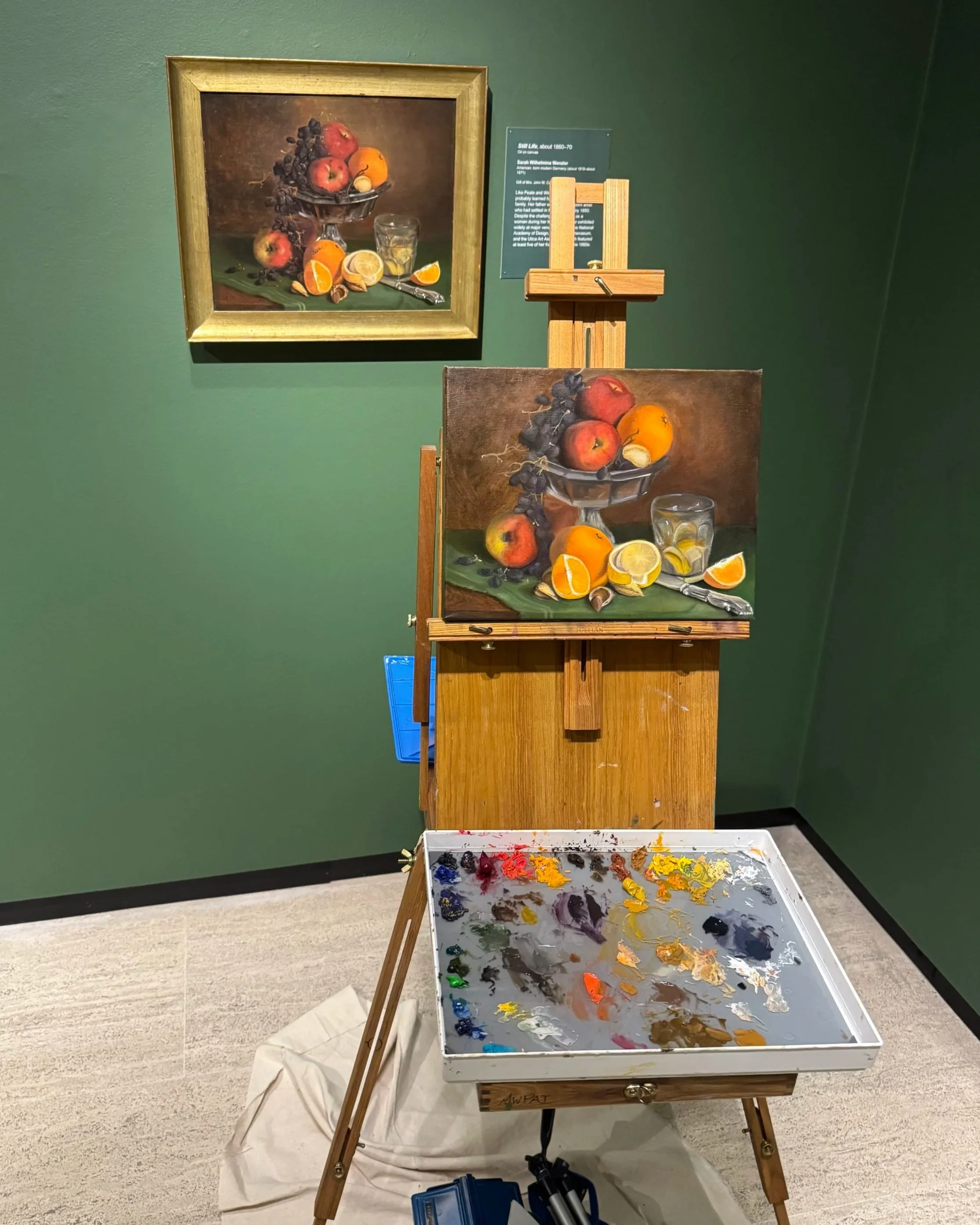
Jill’s paintings are rooted in traditional methods. She works in layers, beginning with a Grisaille on toned canvas and finishing with thin glazes, intentionally avoiding technology in the process.
Much of her learning comes from studying historical painters directly. She regularly paints inside the Munson collection in Utica and recently completed an eight-month study of a still life by Sarah Wilhelmina Wenzler, researching both the painting and the science behind its pigments.
Her subjects are often chosen for the problems they present: reflective copper, bright yarn against blue cloth, eggs and fruit used to study form and light. “I think of each painting as a study,” Jill explains. “The goal is to become a better painter. Making paintings is a secondary outcome.”
“The work begins with truly observing light, temperature shifts, and soft and hard edges,” she says. “My task is translating observation through the medium.”
The process is slow and deliberate, something she values in contrast to the pace of modern life. She often returns to Sister Corita Kent’s Ten Rules, especially Rule 7: “The only rule is work. If you work, it will lead to something. It’s the people who do all of the work all of the time who eventually catch on to things.” She also believes “the work” includes looking, staying open to inspiration, and maintaining supplies and spaces.
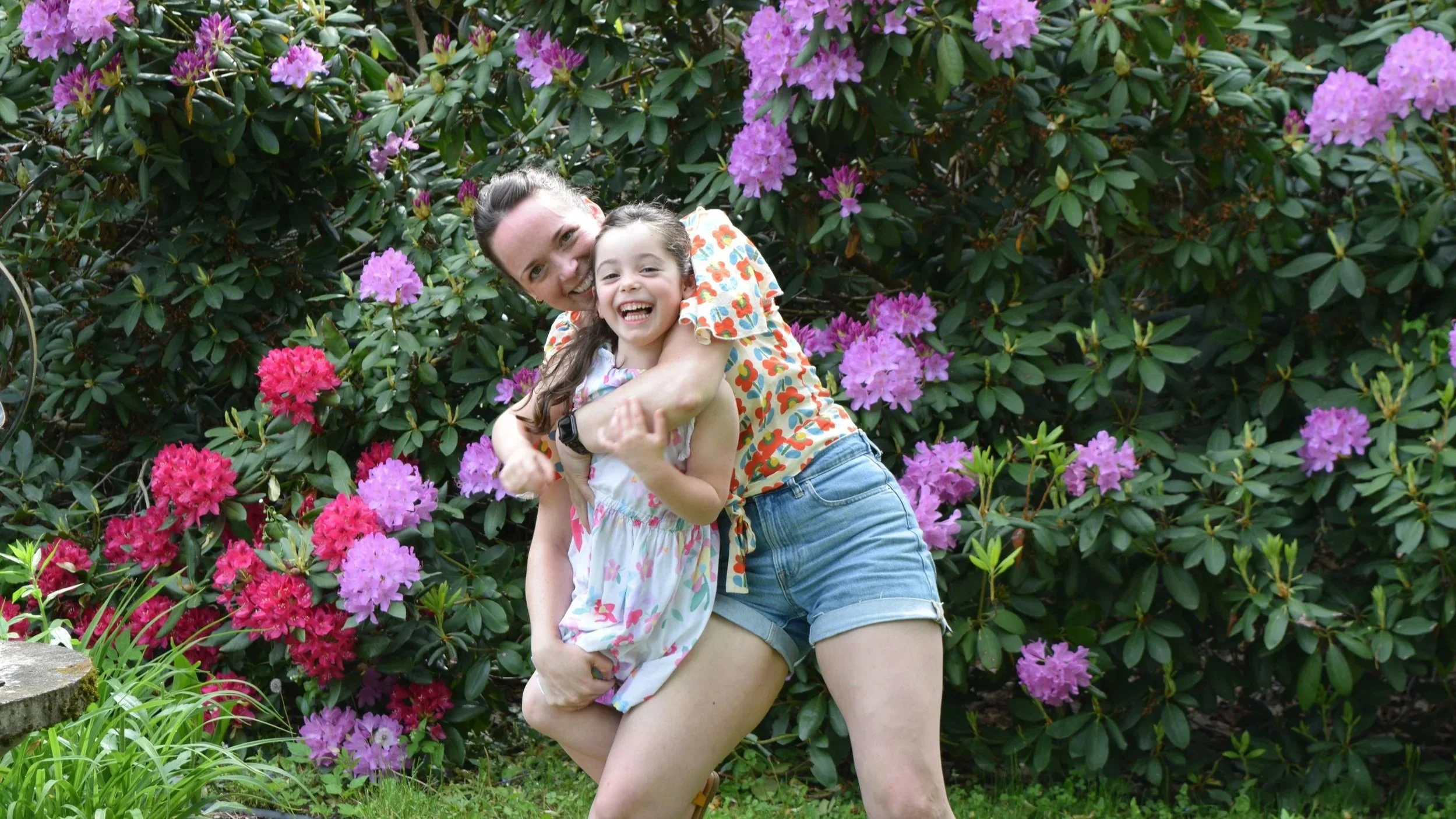
“I approach every painting as an opportunity to learn,” she says (Rule 4: Consider everything an experiment.) One of Jill’s proudest aspects is knowing her daughter gets to witness her dedication and how patience, curiosity, and consistency pay off in work.
Jillian was thrilled when Henry reached out about featuring her art at the Hamilton Winter Jazz Fest. What stood out to her at the Palace was the intention behind the space, bringing different kinds of artists together and encouraging conversation.
In a culture that often values speed, profit and productivity, she sees her paintings offering something quieter. “My work is small, slow, and human,” she says. “My hope is that my paintings will offer viewers an opportunity to pause and reflect at the Palace. I encourage folks to really lean in and stick their noses in the frame.” As technology continues to evolve, she hopes her work can show the humanity of art and foster conversations around tradition and innovation.
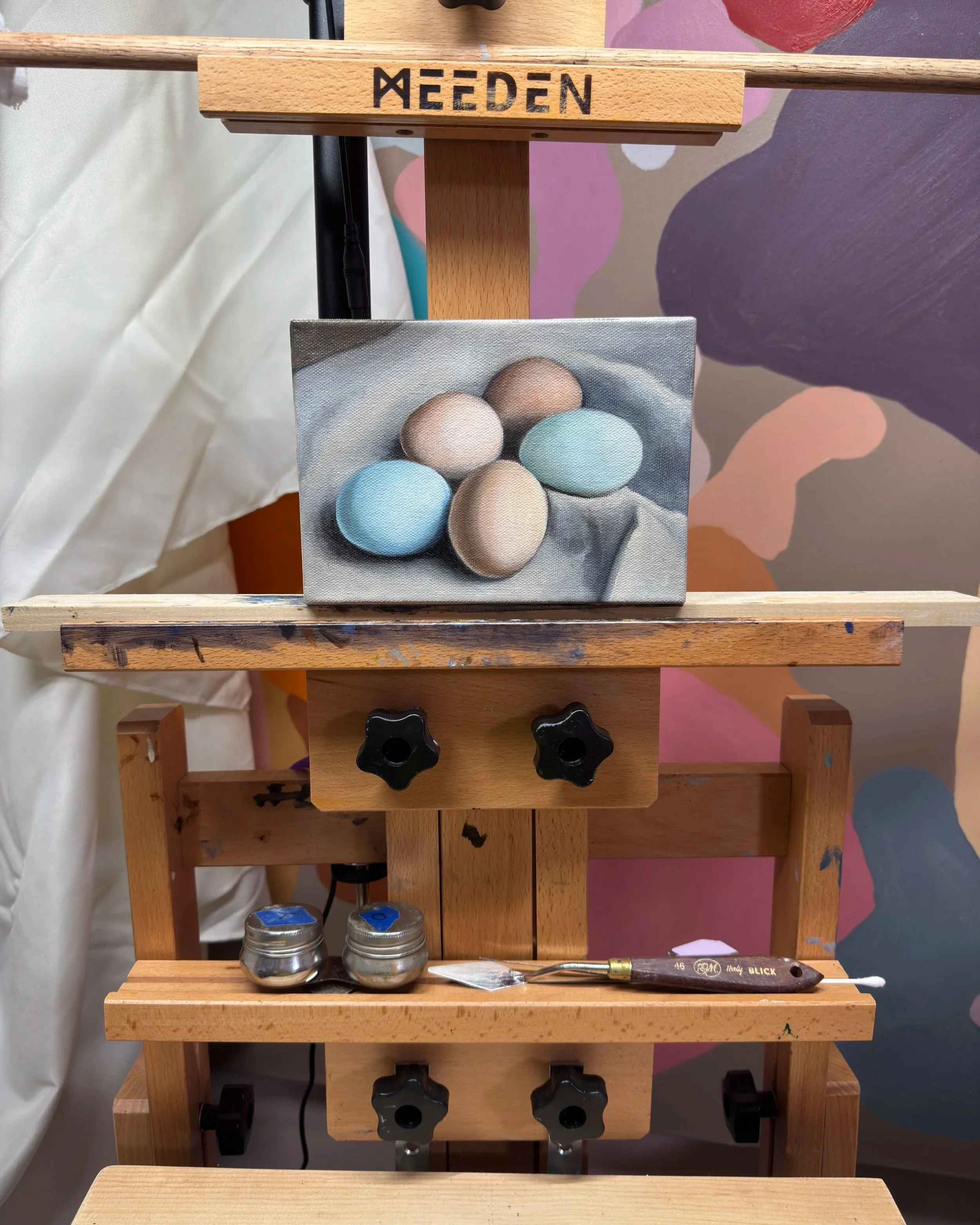
Jillian Szeliga’s paintings will be on view at Arts at the Palace during the Hamilton Winter Jazz Fest, including the March 6 Dave Solazzo and The Bridge Premiere Performance evening and Open Gallery Hours on Saturday, March 7 from 2:00–5:00 pm, following Saturday Jazz with Monk Rowe.
Slow down, look closely, and spend time with the details.
You can find Jill at www.jillianszeliga.com or on Instagram @jillerbeez