Theater Maker Osvaldo Sandoval-Leon | Featured Artist Series

“As a collaborative practice, theater encourages collective thinking toward a shared goal: creating awareness around issues that impact our social worlds. It opens a space for dialogue, in which bodies carry meaning, gesture becomes argument, and presence itself gives voice to complex and often marginalized perspectives.”
- Osvaldo Sandoval-Leon
Featured Artist Series
Osvaldo Sandoval-Leon | Theater Maker
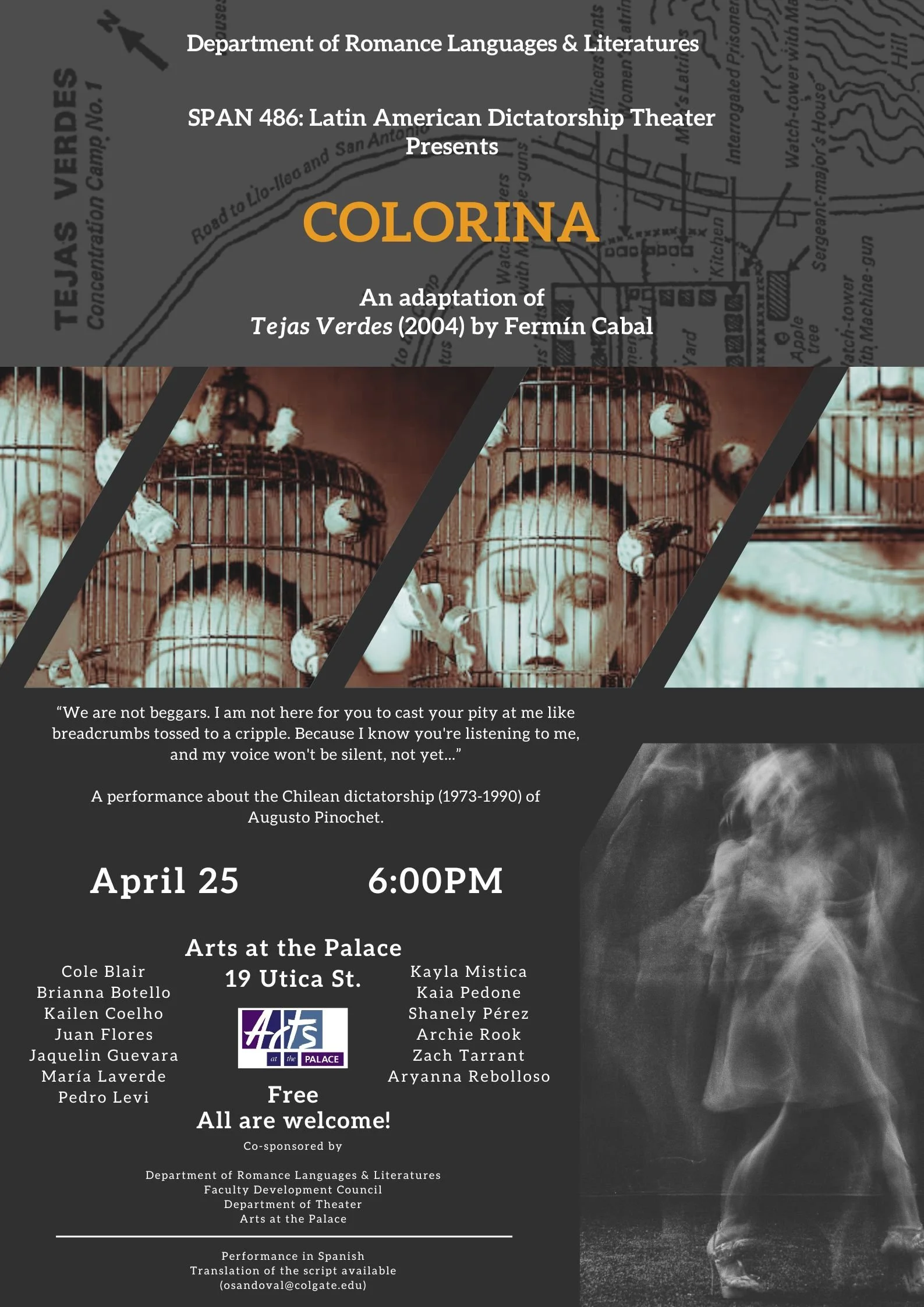
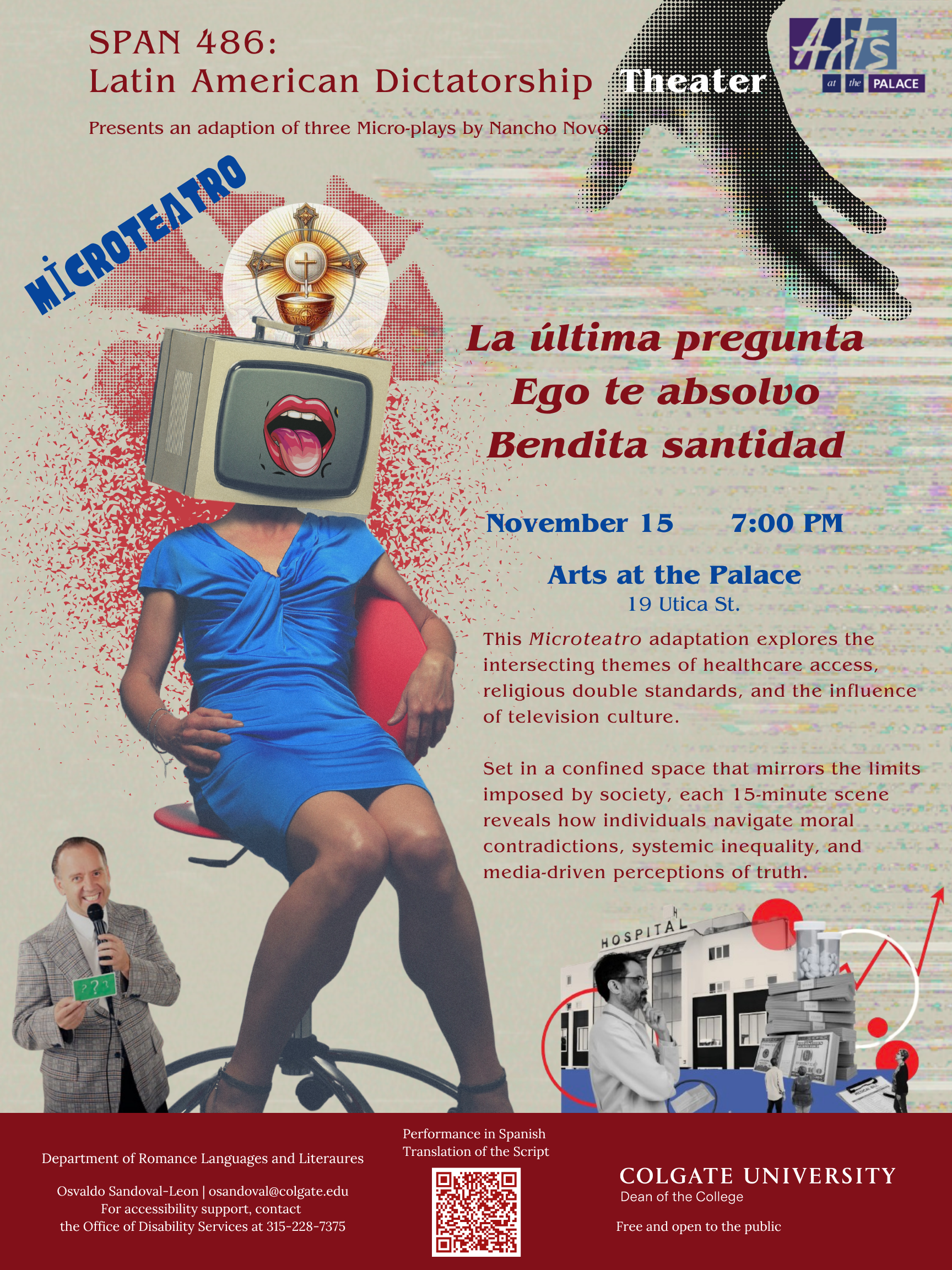
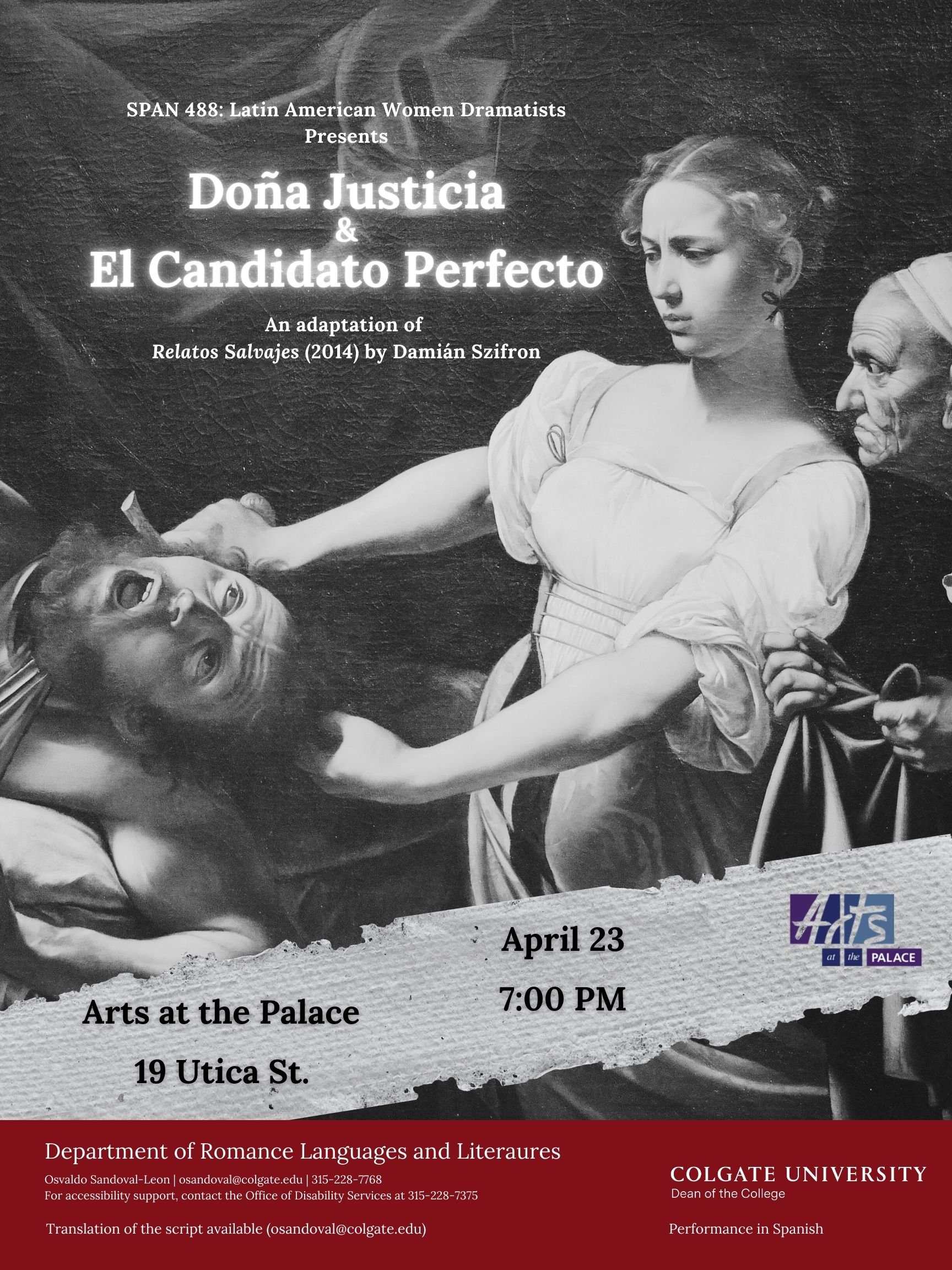
Osvaldo Sandoval-Leon is an Associate Professor of Spanish in the Department of Romance Languages and Literatures at Colgate University, and for several years now, he has also been a steady theatrical presence at Arts at the Palace. Each year, Osvaldo works with students who rehearse and perform at the Palace, bringing new productions into the community. His work here has included Autoceguera, Crónica de una mujer ultrajada, Doña Justicia y el Candidato Perfecto, COLORINA, a series of Microteatro performances (watch selections), as well as a live collaboration with the Indigenous Maya rock band Sak Tzevul. Together, these projects offer a clear introduction to Osvaldo’s work and why he continues to return to the Palace as a place for making theater.
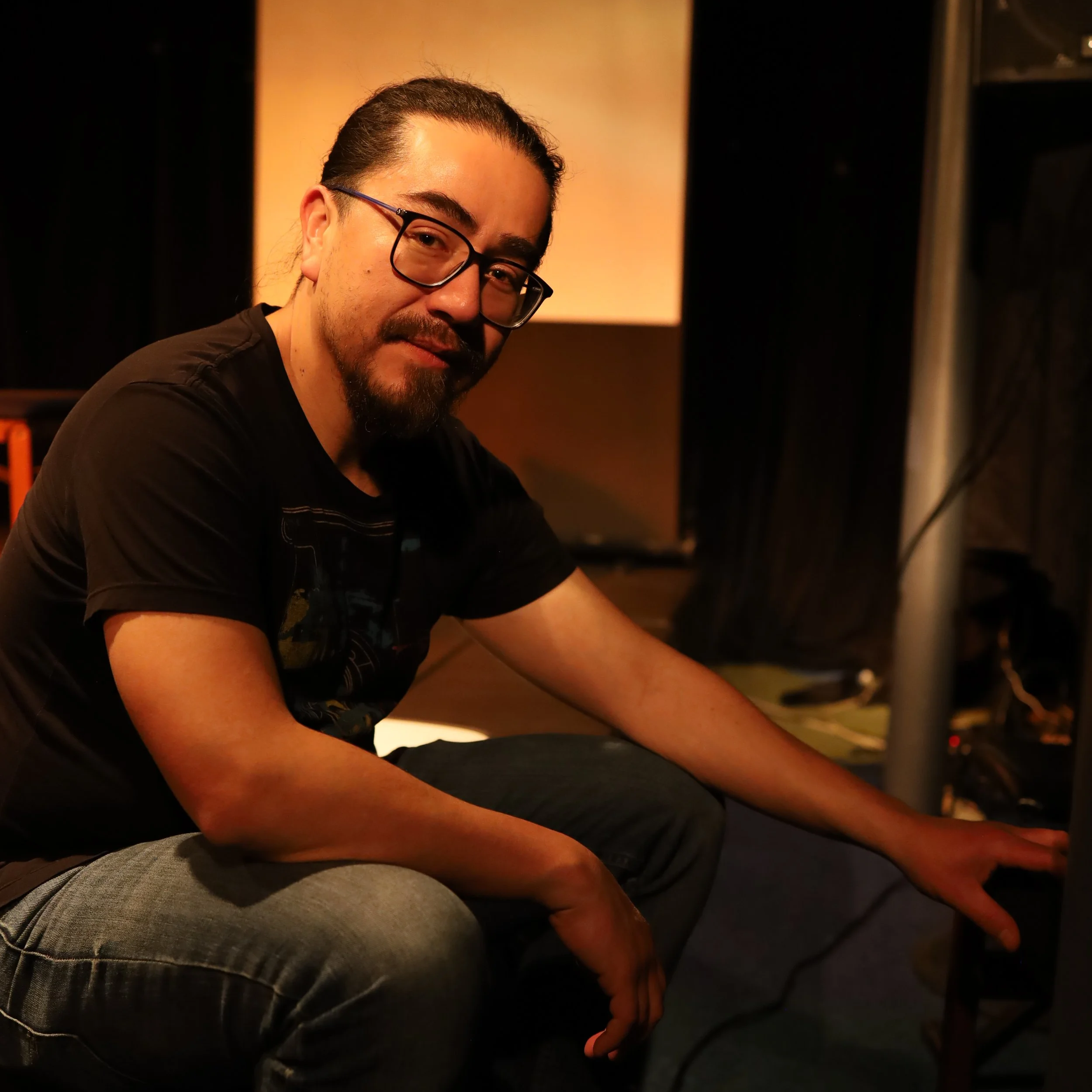
Osvaldo came to Hamilton in the fall of 2019, directly from graduate school, looking for “an environment that would value and sustain an interdisciplinary, artistically driven approach.” While his academic work brought him here, it was the ability to connect performance, students, and community that helped him put down roots. Outside of work, he and his family found “a safe and welcoming environment that is, most of the time, culturally aware and respectful of differences and traditions,” particularly those of historically marginalized communities. That awareness is closely tied to the kind of work he chooses to bring to the stage.
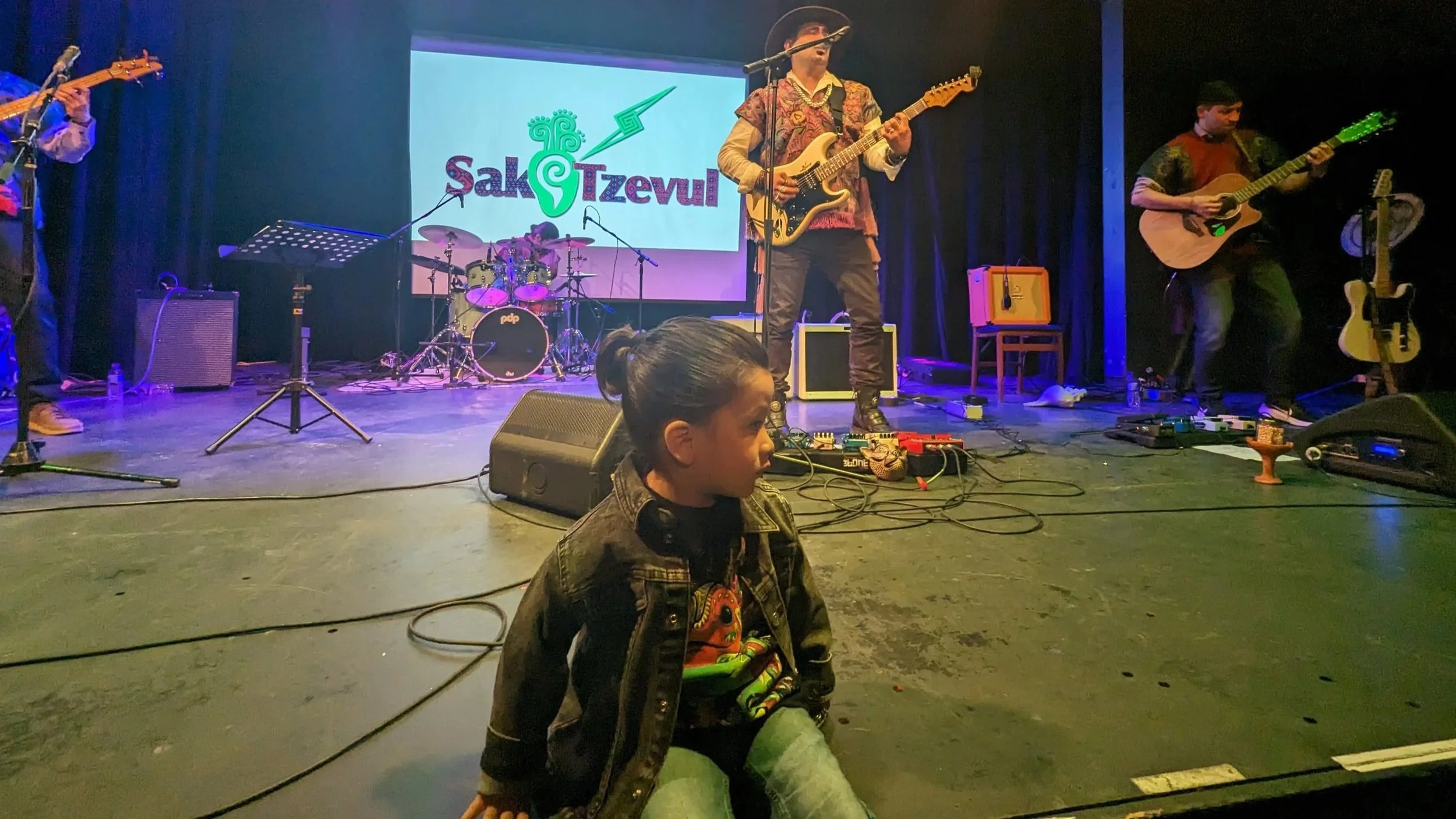
Osvaldo’s son, Gael, at a live Sak Tzevul
Born and raised in Mexico City, Osvaldo’s relationship to theater began during his undergraduate studies at California State University, Fullerton, where plays were treated primarily as texts to be analyzed. As he explains, “these courses approached theatre primarily through textual analysis, with little attention to theatre as an artistic and embodied practice.” Wanting something more immediate and lived, he formed a theater group with peers to stage performances themselves, despite having no formal training. Afterward, he was especially struck by the surprisingly positive response, especially from family members who had never read a play or seen theater before. He realized how effective a tool theater was, “through these performances, we were able to communicate meaningful messages and raise awareness around social issues.” That experience, he says, “revealed to me the transformative potential of theatre beyond literary analysis alone.”
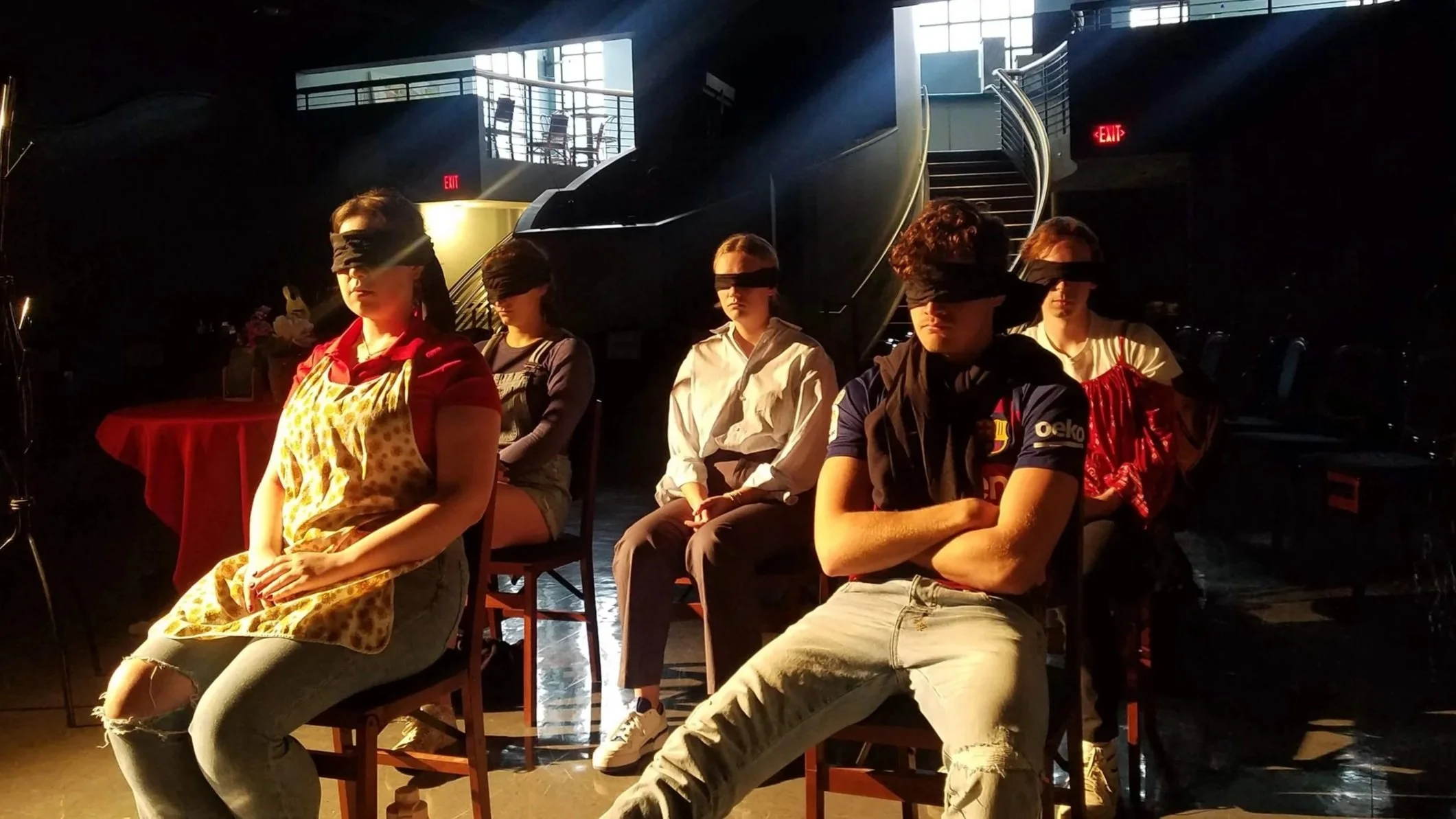
That understanding continues to motivate his work today. Osvaldo’s research and creative practice focus on political theater and performance in Latin America and Spain, particularly in post-dictatorship contexts. He is “particularly attentive to the ongoing dialogue between past and contemporary conflicts and the ways in which these continuities reactivate fear and trauma within societies.” For him, theater is a space for transformation… “not only for immediate victims of violence, but also for younger generations growing up amid the unresolved legacies of the past.” Through dramatic texts and performance practices, his work examines how theater can contribute to “collective demands for justice and processes of social healing,” emphasizing “theater’s capacity to give voice to victims and to foster critical engagement with histories of violence.”
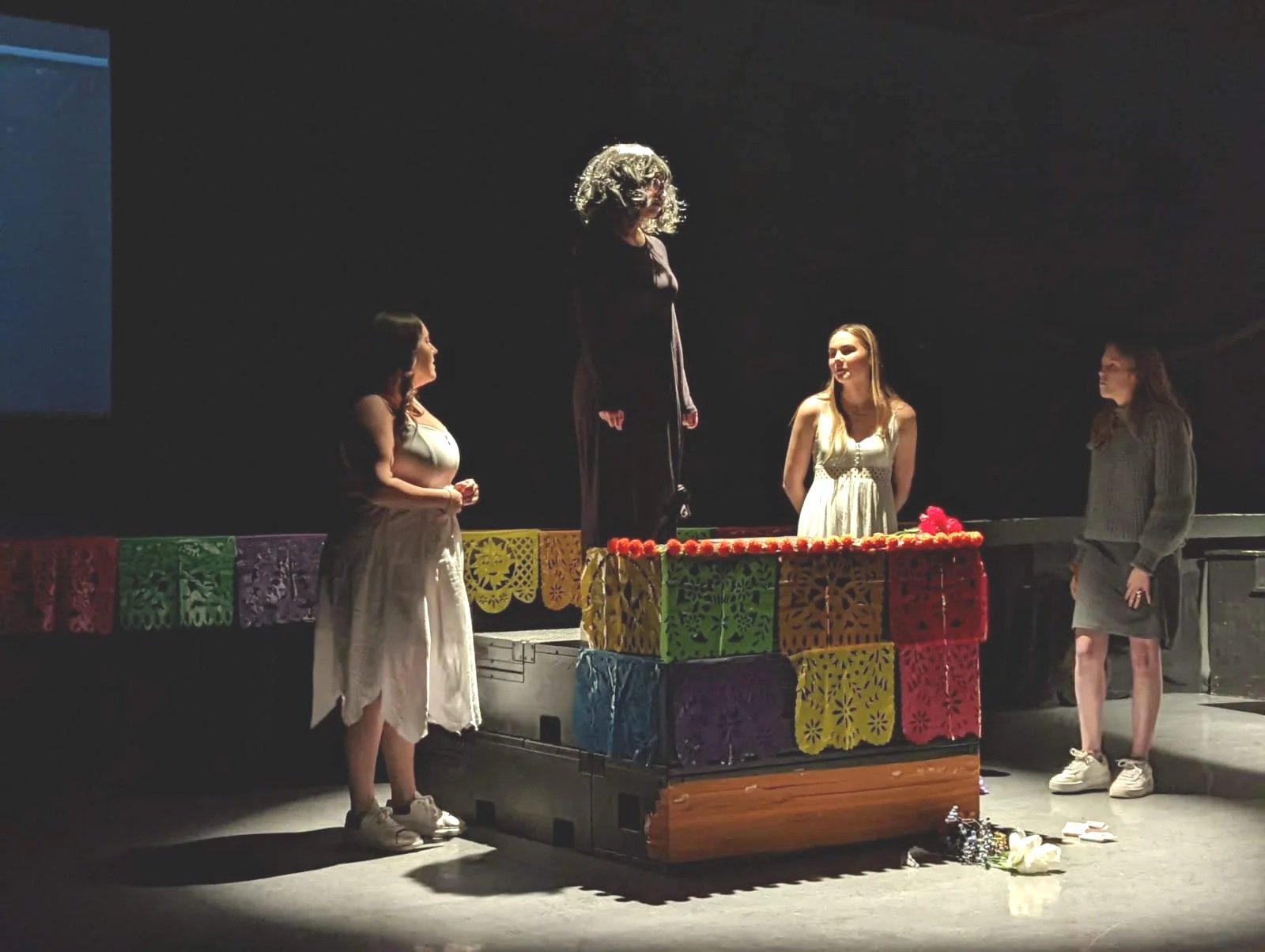
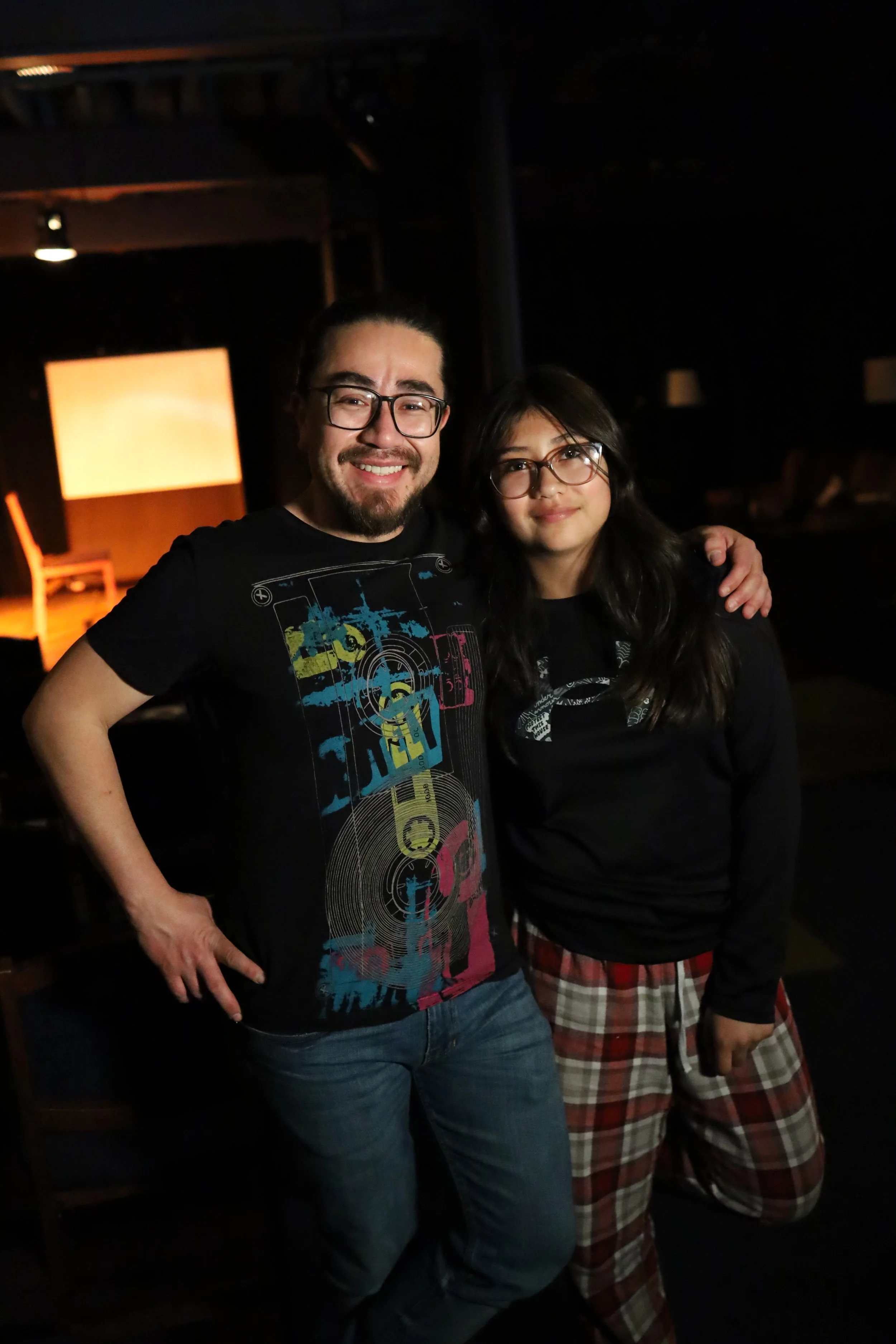
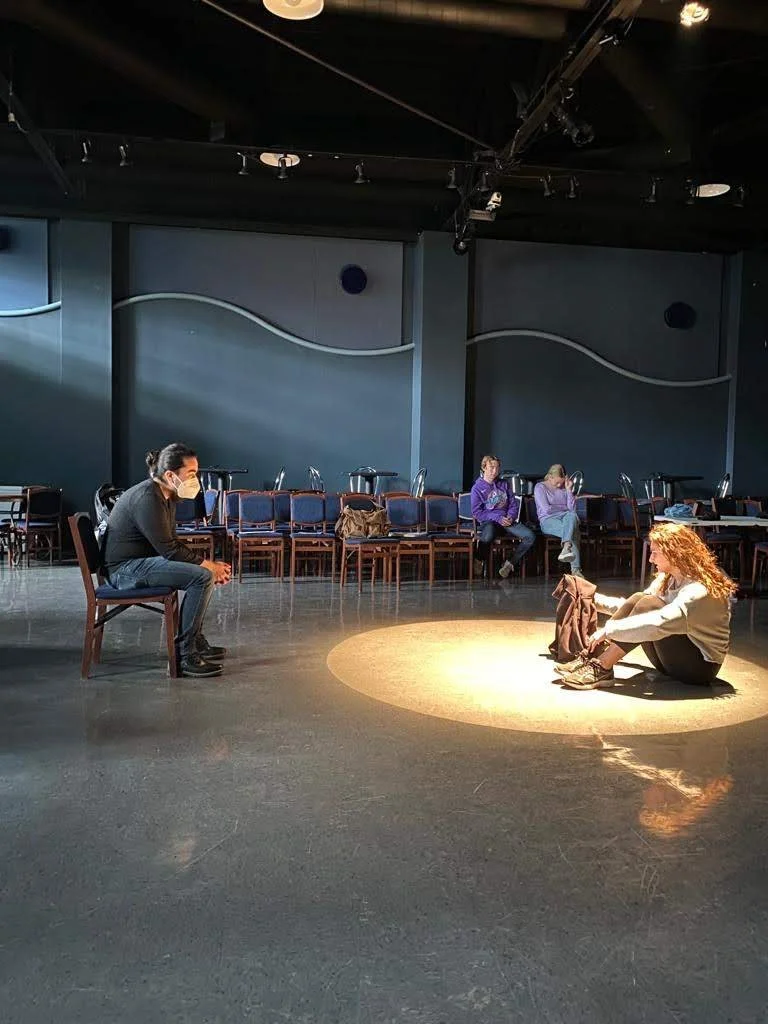
What excites him most about creating theater in an academic setting is “the opportunity to expose students to an artistic approach that complements and expands the readings and theories they encounter in the classroom.” He is deeply motivated by inviting students who are already committed to thinking critically about the world to move beyond analysis on the page and into embodied exploration.
Many arrive with little or no theater experience, and most are non-native speakers of Spanish. Osvaldo is particularly aware of what it asks of students. “Students are willing to step outside their comfort zones,” he says, and he recognizes “the courage and commitment it requires.” When productions reach the stage, “I witness effort, teamwork, perseverance, achievement, and genuine growth.” Students are invited to live the literature, engaging all of their senses as they grapple with historical, cultural, and political questions. By testing ideas through movement, voice, and interaction, theater becomes a space for dialogue and critical engagement rather than entertainment alone.
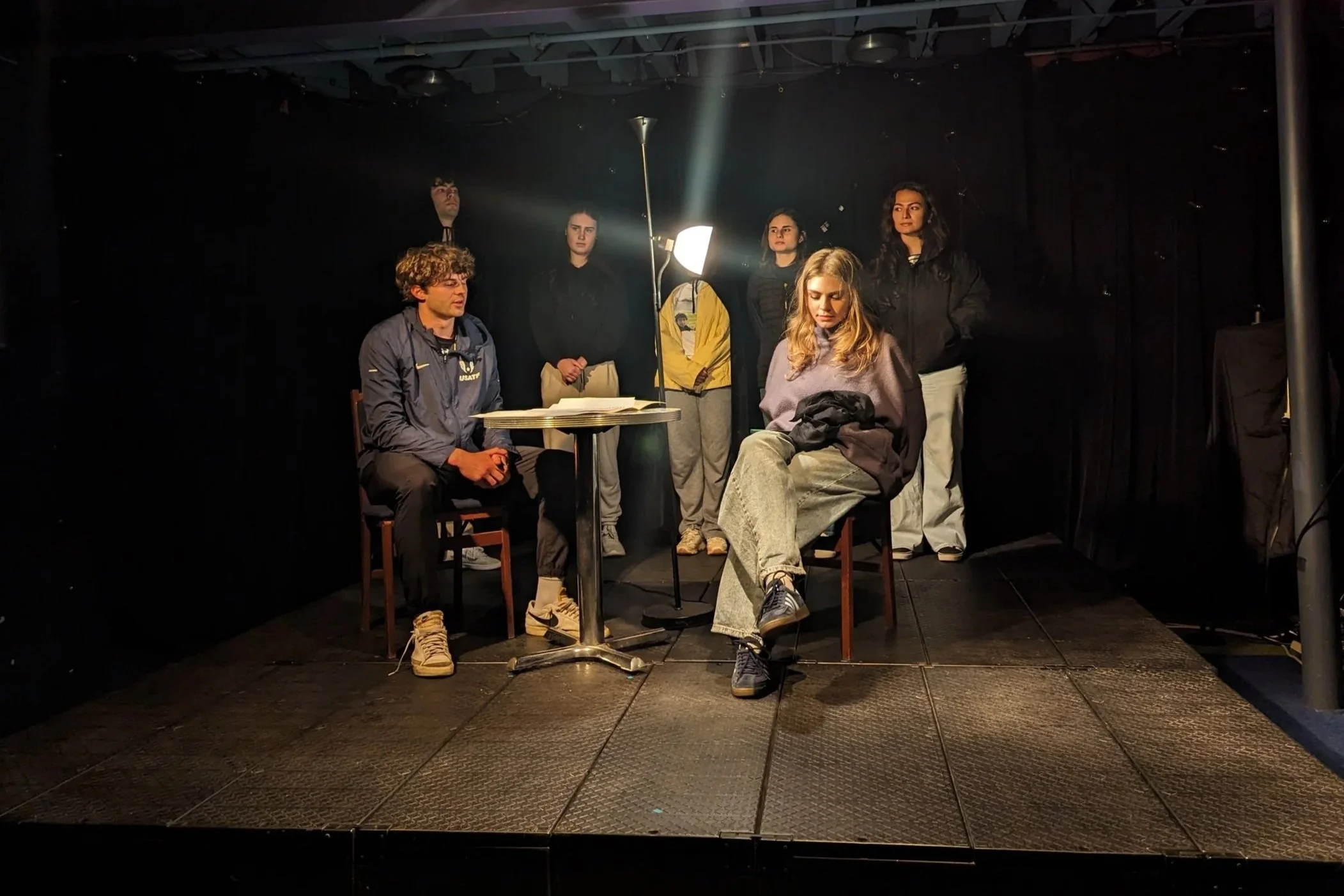
Arts at the Palace has been an essential part of making this work possible. Before coming to Hamilton, Osvaldo found that often arts organizations were highly selective and inaccessible, especially for artists outside traditional theater pathways. At the Palace, that barrier didn’t exist.” Arriving in Hamilton, Arts at the Palace opened its doors without hesitation or reservation.” Support only deepened when Executive Director Henry Howard came on the scene, he says, “as the Palace expanded its access for local artists and community members, transforming it into a vibrant space for creation.” Osvaldo describes Henry as “one of the most important sources of support and motivation” in this aspect of his work, noting that the openness, generosity, and practical support have created a true platform for his artistic expression.
Alongside his creative work, Osvaldo is the author of Cuerpos resilientes y disidentes: violencia político-sexual en el teatro transatlántico de posdictadura (2025), a book that examines how contemporary theater confronts political and sexual violence in post-dictatorship societies and how performance allows younger generations to engage with memory, justice, and accountability. He earned his MA from California State University, Fullerton, and his PhD from Michigan State University, where he also taught before coming to Hamilton.
At its core, Osvaldo’s work treats theater as a space for dialogue and responsibility. “Theater is not about entertainment,” he says. “It’s about opening a space for dialogue, reflection, and critical engagement.” That practice continues to take shape each year at Arts at the Palace, through students, community members, and the shared work of being present with one another.
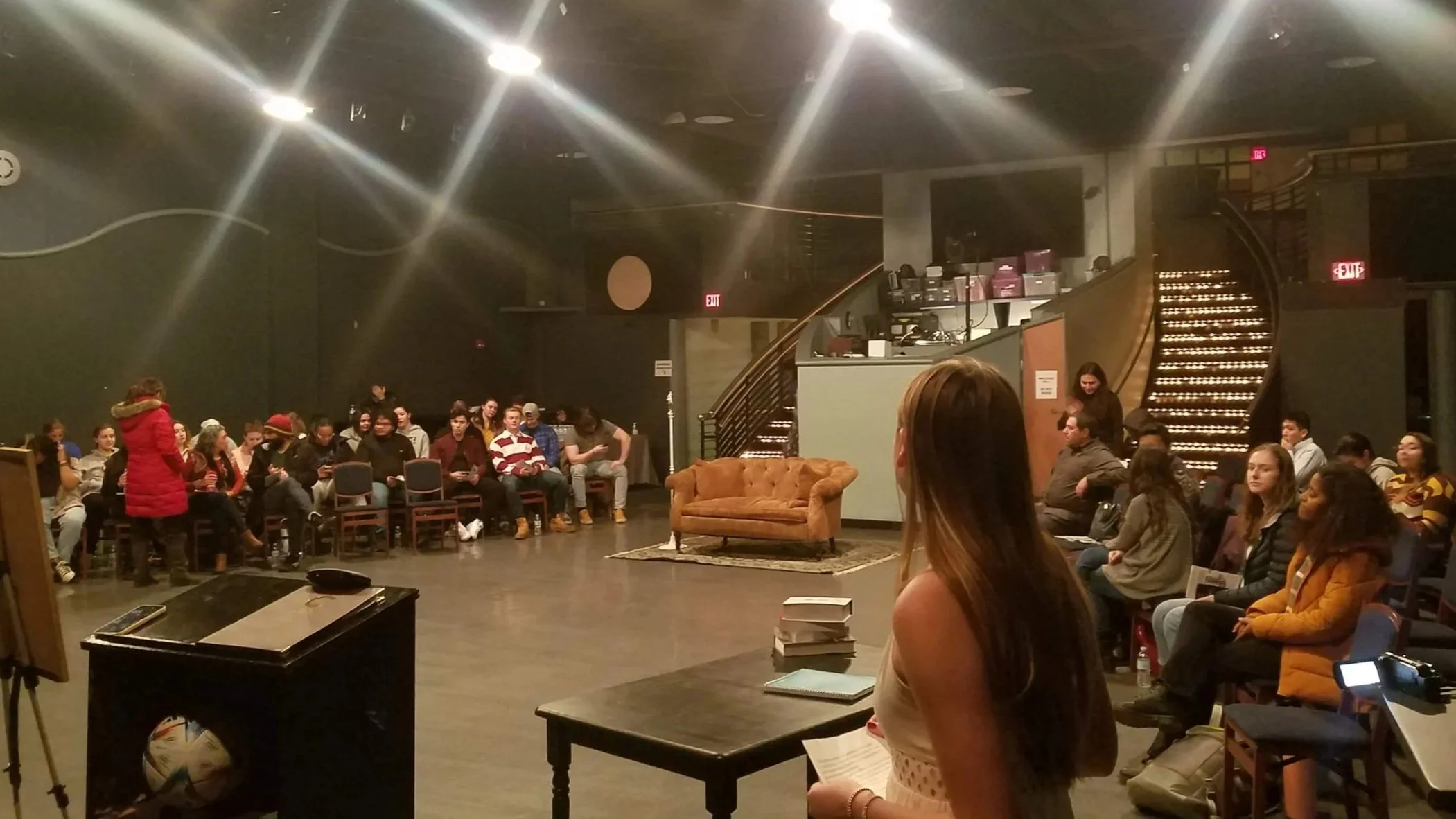
Osvaldo is currently working with students on a new theatrical production scheduled for March 28th, 2026 at the Palace Theater, continuing a pattern of annual collaboration that has become a familiar presence on the Palace stage.
[Watch selected productions by Osvaldo]
email: osandoval@colgate.edu